
William Holden
The Corrupted

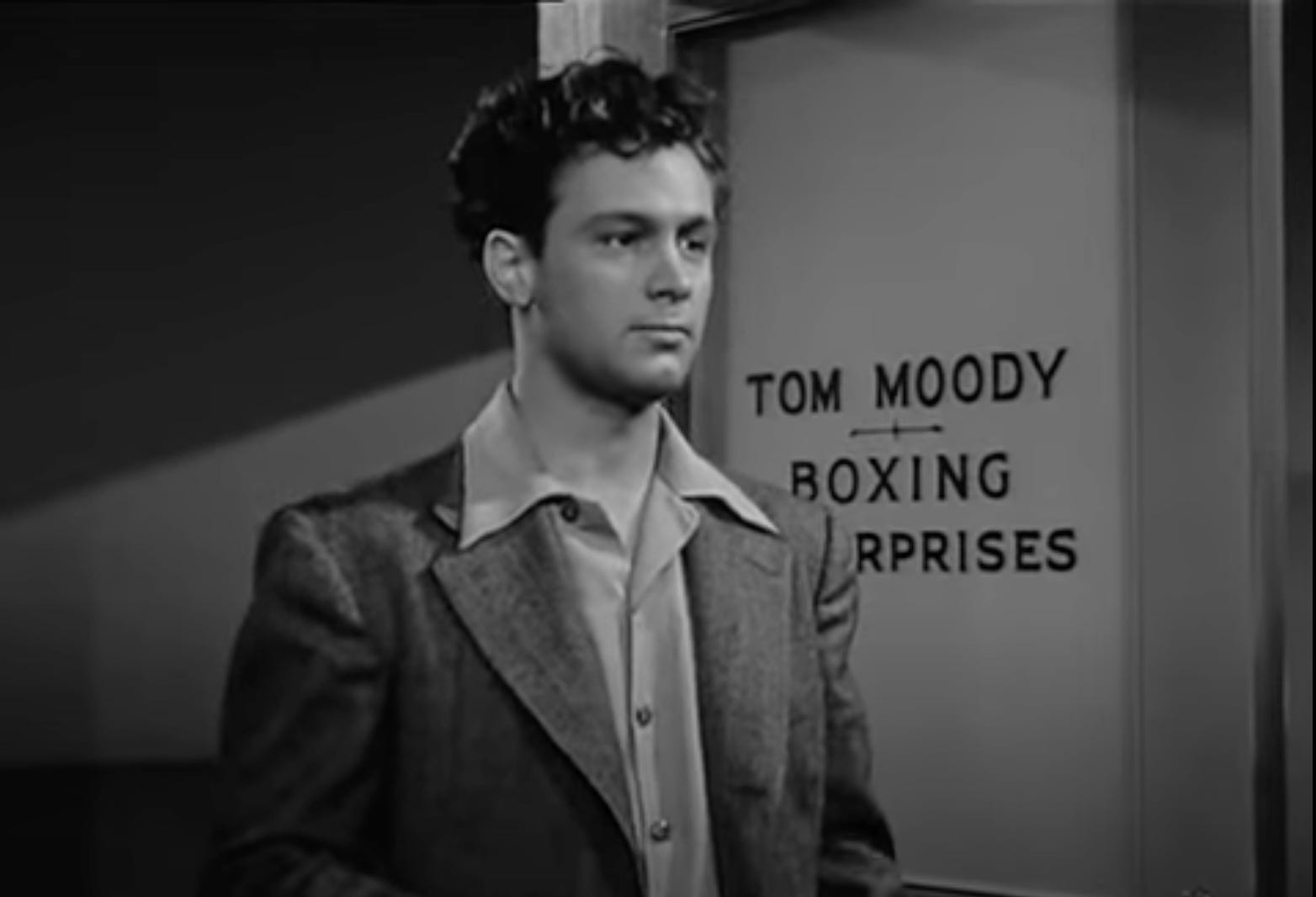
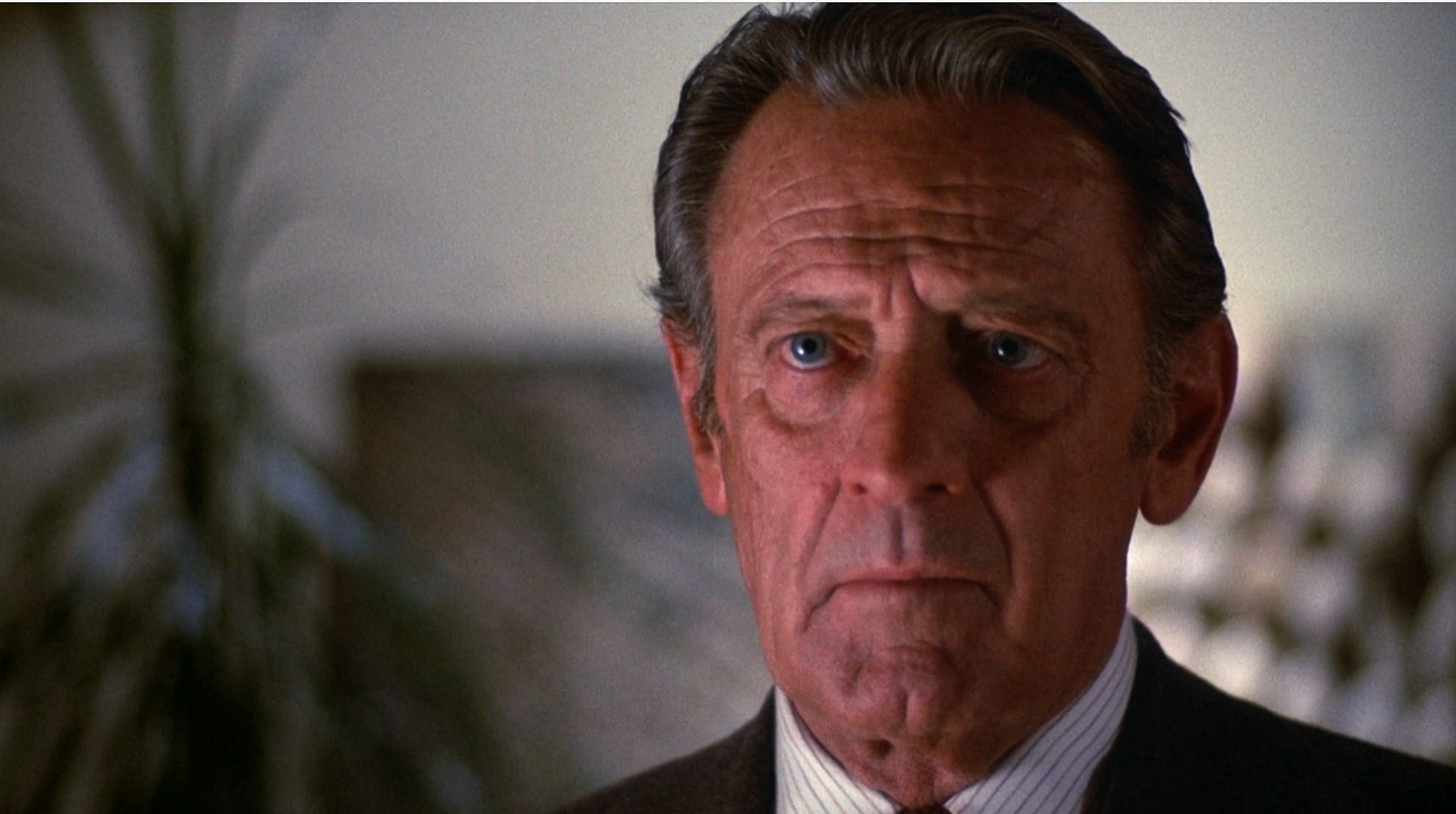
During the course of an over 40-year film career, William Holden’s physical appearance changed in the most drastic possible way. When he first appeared on screen in 1939, he was fresh-faced, innocent, and beautiful, with a cleft in his chin, sensitive eyes and mouth, and lustrous hair. Holden smiled a lot, and this smile was something he used to disarm others right up to the end of his life in 1981, when his face had become extraordinarily lined and craggy; his eyes were sunken by then, his mouth had disappeared, and drink and anxiety had taken a large toll on him.
Holden was brought up in a very conservative family in Pasadena, California, and his mother was supposedly a descendent of George Washington. As a youth, Holden did his best to please his mother and her very restrictive sense of correct behavior, but he rebelled sometimes by doing physically dangerous stunts in the company of friends. He was expected to join his father’s business, but he got sidelined into an acting career nearly against his will when a producer heard him act in a play on the radio and he was tested, like many other actors, for the leading role in Golden Boy (1939), a film adaptation of Clifford Odets’s play.
Director Rouben Mamoulian saw something in the young Holden that could work for the part, and so he was hired, but he was so green that Columbia chief Harry Cohn and finally Mamoulian himself thought of firing him until his leading lady Barbara Stanwyck started intensely working with him on his part at night. Stanwyck was always best on her first take, but if Holden needed many takes to get his performance right, she would allow his best take to be used because she was on his side. Many years later, when they presented an Academy Award together in 1978, Holden paid tribute to Stanwyck, who cried, “Oh, Bill” in response, her public reserve melted for a moment.
Holden is everything he needs to be in both Golden Boy and Our Town (1940), an adaptation of Thornton Wilder’s play, and even though his speaking voice is much higher in this period than it would be later, he had a way of delivering heightened and/or gaudy theatrical dialogue that gave it verve and believability. The 1940s were otherwise an apprenticeship period for him where he took out three years in the middle to serve in World War II, and on the urging of his mother he also “settled down” and married a fellow actor, Brenda Marshall, and had two children with her, but deep inside Holden there was a need to escape societal expectations, to drop out, to get away. His range was fairly narrow; he is unbelievable and unthreatening as a villain in The Dark Past (1948).
Holden idled in wholesome comedies and worse until coming to his breakthrough role: Joe Gillis in Billy Wilder’s Sunset Boulevard (1950), a struggling writer who allows himself to be drawn into the web of the demented former silent screen star Norma Desmond (Gloria Swanson). Holden famously narrates that picture as a corpse in Desmond’s pool and pitilessly tells the tale of his own failure and moral compromise with a sadomasochistic relish for the most excruciating details; who can forget the look on Holden’s already-lined face when a male clothing store employee advises Joe to take a more expensive coat because, “As long as the lady is paying….”
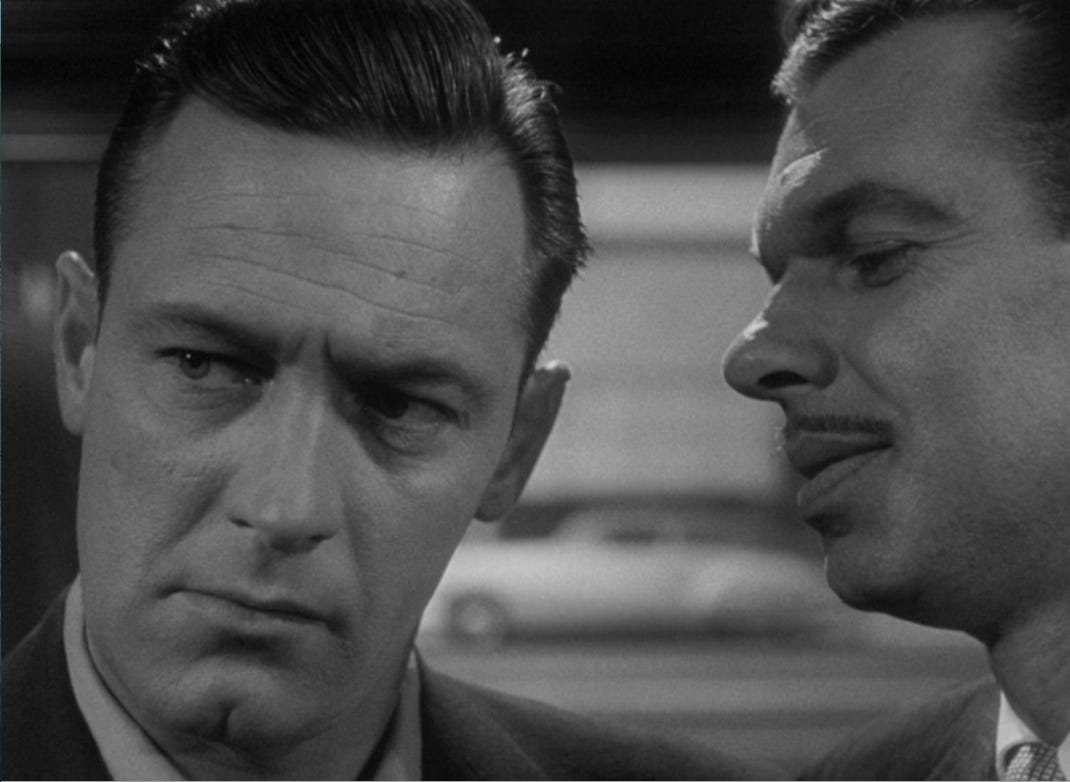
Holden’s Joe Gillis has an air of sexual availability about him even in the first scenes before he meets Norma, when he is wearing just a short robe in his apartment and is accosted by men who want to impound his car; there is a small hole in his right cheek now, as if someone had taken a bite out of it. Holden had a smooth way of walking on screen that subtly said, “Yes, my body is beautiful, and it is probably up for grabs.”
Gillis is a wise ass, like Wilder was, but Holden’s Gillis is a tender wise-ass, and this is his downfall. Holden’s sad/sensitive eyes often balance the extremely barbed things that Gillis has to say for himself, both in his narration and in his encounters with others. A good guy would reject Norma’s offer of money right away, while a purely mercenary man might have played her for what she was worth and then departed. Holden’s Joe Gillis is doomed because he is somewhere in between good and bad, and Sunset Boulevard is a very pessimistic movie because it shows that Gillis’s good impulses, his moments of sympathy for Norma, are what finally destroy him.
Joe can’t help kidding Norma’s grand 1920s-movie-style emotions, and he is unable to take them seriously, which proves fatal. Norma has contempt for Joe, which is revealed when she makes a nasty phone call to the young Betty Schaefer (Nancy Olson) about him, but Joe doesn’t have contempt for Norma. He thinks he can escape from her tomb of a home and her delusions without paying a price, a very American point of view; a totally unscrupulous man might have made it out, but Joe has too many stirrings of conscience for that.
Joe can be tough with Norma; after she threatens suicide, which is a regular routine for her, Joe says, “Oh, wake up, Norma, you’d be killing yourself to an empty house.” But almost immediately after this he levels with her and says something very sensible: “Norma, you’re a woman of 50…there’s nothing tragic about being 50…not unless you try to be 25!” But Norma Desmond cannot be reasoned with. The collision of his point of view and hers ends in murder and madness, and lots of lurid press coverage, because Joe underestimates just how far gone Norma is and he also doesn’t understand her need for a grand gesture, a holdover from all the melodramatic movies she used to star in. The humanity that Holden and Swanson bring to this conception makes it tragic.
Holden got an Academy Award nomination for best actor for Sunset Boulevard, and that same year he was very likable support to Judy Holliday in Born Yesterday, which won her the Oscar that Swanson was also up for. As his career gathered steam in the 1950s, he still made too many trivial movies for Paramount and Columbia, and he wasn’t assertive; quite often he found himself playing second or third fiddle to others, as in Sabrina (1954), where Wilder has him play a sleazy playboy who sits on some champagne glasses and spends the remainder of the film with painful cuts on his rear end. He won his lead actor Oscar for Wilder’s Stalag 17 (1952), a POW movie in which he played a Bogart-like opportunist who eventually works for the good of the team, but with a final sneer at them to make up for it.
Off screen, Holden’s excessive drinking and philandering was often out of control, and his ease was gone in Picnic (1955), where he is very self-conscious as a bragging loser and stud. He made a mint from The Bridge on the River Kwai (1957) because his contract gave him a percentage of the profits, and he made it clear in interviews that he only worked on as an actor because he had other interests that needed money, particularly his advocation for animal conservation. There was a serious affair with Capucine, and he received a suspended sentence for manslaughter after a car accident where he killed another driver in Italy in 1966, a spur for guilt that added more lines to his face.
Holden was a figurehead for the extravagant violence of Sam Peckinpah’s The Wild Bunch (1969), and then he gave himself up to the pontificating dialogue of Paddy Chayefsky in Network (1976), for he was always very believable as writers and reporters. He played the lead for Billy Wilder in Fedora (1978) and still seemed physically game, with that stirring mixture he had of schoolboy nobility mixed with the lowest sort of sleazy corruption.
At age 63 in 1981, Holden fell and hit his head while drinking at his home in Santa Monica; he was conscious for at least a half hour after the fall, and his body was found four days later. It was a gruesome end that might even have stopped Joe Gillis from making a smart remark, though Billy Wilder himself said, “To be killed by a bottle of vodka and a night table—what a lousy fade-out for a great guy!”
I can't believe I didn't know that Holden died this way - an eerie parallel to the ending of Sunset Boulevard.
Great actor
Under-rated