
Ronald Colman
The Perfect Gentleman

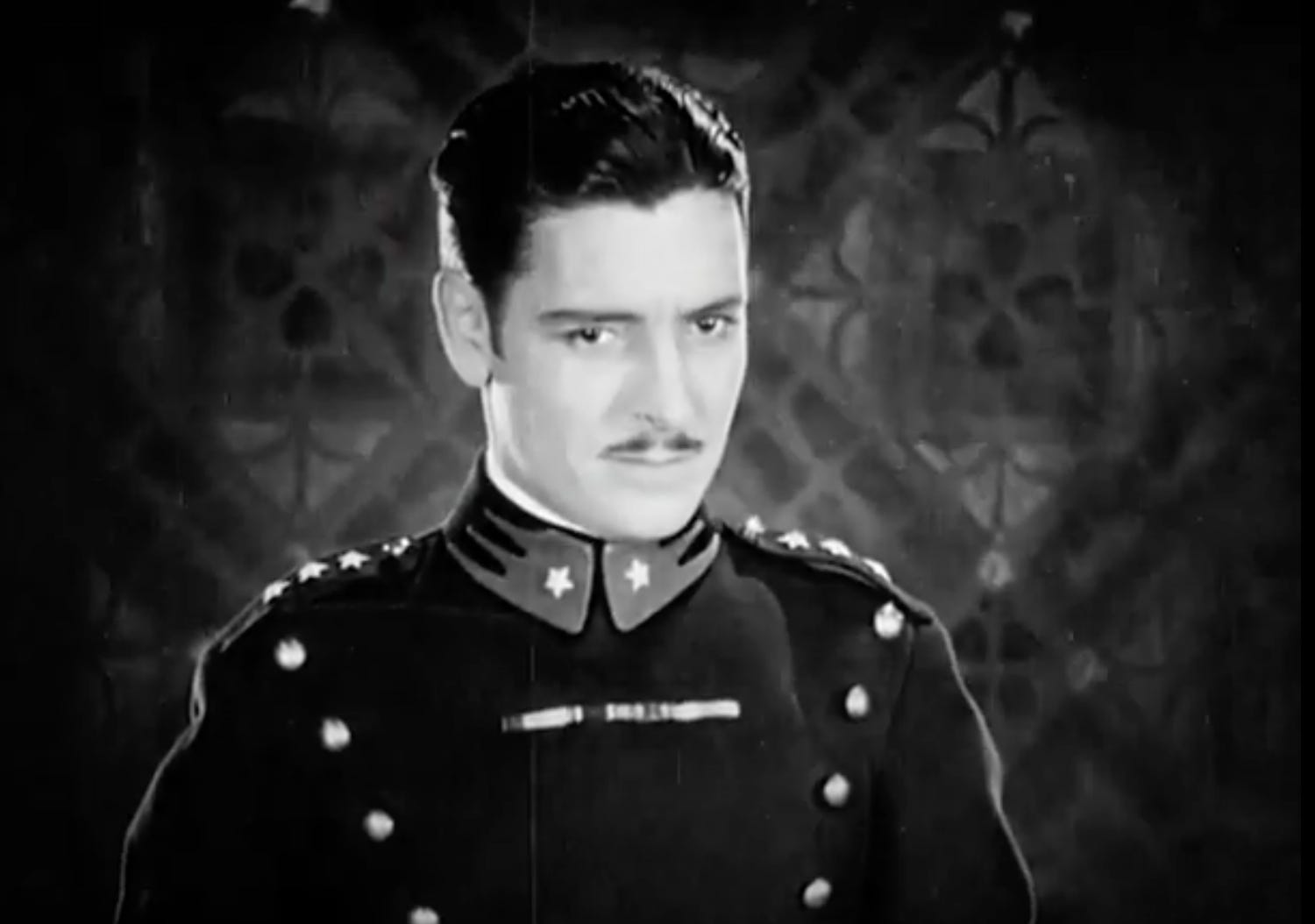
The speaking voice of Ronald Colman was one of the joys of classic Hollywood: cultivated, modulated, mellifluous, with an unmistakable music all its own. Colman only really hit one note with it, a sort of wistful oboe note, but that note was enough if the writing of the picture suited his restrained lyricism. Always in that voice there was a yearning for some finer place, and so of course Colman was most at home in Lost Horizon (1937), where his wearied gentleman adventurer finds a sort of utopia called Shangri-La. Colman’s voice was so famed that in Kitty Foyle (1940) it is when rich boy Wyn (Dennis Morgan) does an expert imitation of Colman’s way of speaking that he forever snares the heart of Ginger Rogers’s working class Kitty, a movie fan who knows that this voice signals aspiration to the reserved, amused classiness Colman represented on screen.
Colman himself came up the hard way after his father died in 1907, which sent the teenaged Colman to work in an office for five years. He served in World War I and went through harrowing experiences before he was wounded and sent home; the bit of shrapnel that had lodged in his leg meant that Colman always had to move carefully on screen to disguise any hint of a limp. After the war, he tried to become an actor, but there were very lean years as he worked his way up on stage, and desperate times before at age 32 he was chosen by Henry King to be the leading man to Lillian Gish in her own production The White Sister (1923).
Colman later said that both Gish and King helped him to tone down his theatrical mannerisms, and in this key movie Colman is already very focused in close-ups that command the camera and show very specific and detailed thoughts behind the eyes. In the love scenes he has with Gish, Colman cements his image as a great romantic figure of his time, mustached, ever-noble, and swoon-worthy in his gentle way, a refuge for female spectators who might have been frightened by the more direct sexual pleas of Rudolph Valentino and John Gilbert.
Colman showed that he was up for romantic comedy in two movies with the vivacious Constance Talmadge and another with her sister Norma; in these pictures with the Talmadge sisters, Colman is happy to make silly faces and get his laughs by any means. But he was also up for the high comedy with feelings of Ernst Lubitsch’s Lady Windermere’s Fan (1925), maybe the best movie he was ever in, and certainly the most hyper-controlled by its director. There is a gleam in Colman’s eye in this picture that he probably acquired from imitating his director (Lubitsch was noted for acting out scenes for his players beforehand), and Colman was so emboldened by the Lubitsch touch that it is a shame he only did one film with him; surely Colman could have excelled in the lead for Lubitsch’s Trouble in Paradise (1932).
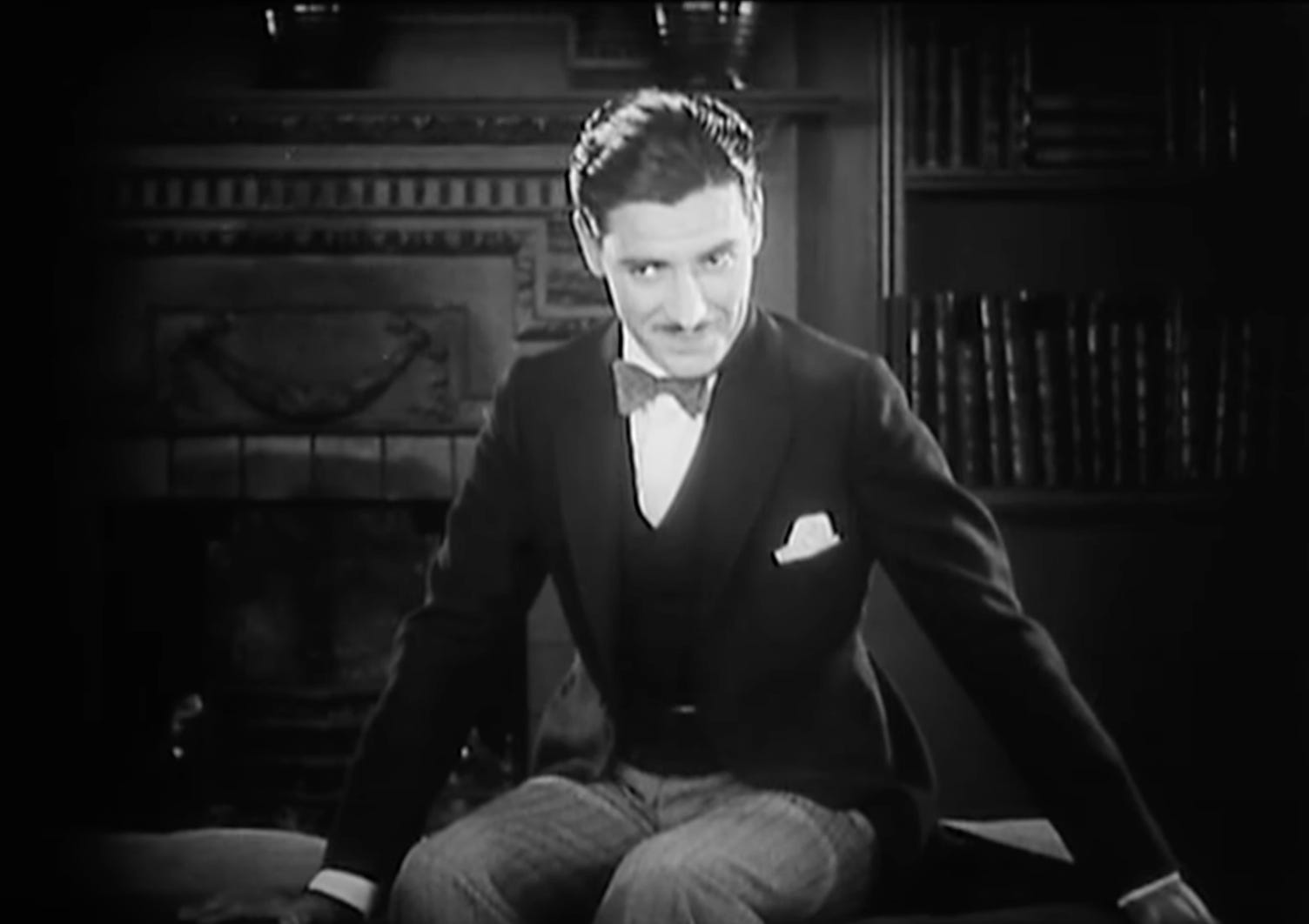
After a series of silent pictures opposite the beauteous Hungarian star Vilma Banky, Colman started making talkies for his employer Samuel Goldwyn, who worked him more sparingly than most moguls did their contract stars. Colman is the essence of well-mannered charm as a gentleman thief in Raffles (1930), particularly in the “ah, yes!” way he submits to the flirtations of rich Alison Skipworth, who owns a necklace he covets. For King Vidor he played a very passive man who drifts into an affair with a young girl in Cynara (1932) and pays a price for it, and he eventually felt the need to sue Goldwyn after the producer put out press releases saying that Colman acted better drunk than sober.
Colman had married in 1920, but the marriage didn’t work out almost from the start, and his wife Thelma Raye took to showing up on his sets and harassing him for money, which pained the fastidious and retiring Colman greatly. He freed himself from both Raye and Goldwyn by 1934, and in 1935 he scored one of his biggest successes in a lavish MGM adaptation of Dickens’s A Tale of Two Cities, nobly stepping up to the guillotine and letting his voice caress the words, “It is a far, far better thing I do, than I have ever done…it is a far, far better rest I go to than I have ever known.”
Careful editing allowed Colman to do the sword-fighting required for The Prisoner of Zenda (1937), and he survived a nasty encounter with a young and harsh Ida Lupino in The Light That Failed (1939) before picturesquely suffering through amnesia twice over opposite Greer Garson in Random Harvest (1942), a very popular piece of wartime escapism balanced by his very adroit contribution to the comedy of ideas The Talk of the Town that same year, where that voice of his blended pleasingly with the equally distinctive voices of Cary Grant and Jean Arthur. There is a very telling and amusing scene in that movie where the prim Colman has to seduce the low-down Glenda Farrell to get a piece of information he needs; class (and social class breaching) was always such a key part of his success.
Colman was in his fifties now, and so his career seemed to be winding down, which is why it came as a surprise when he took on an extremely challenging role in A Double Life (1947) as a theater star who starts to lose his mind as he plays Othello on stage. Nothing in Colman’s previous work would suggest that he would be able or willing to play such a demanding part, but the screenplay by Garson Kanin and Ruth Gordon is so literate and suggestive and the direction he got from George Cukor was so imaginative that Colman rises to the occasion and pushes himself very far and accesses a kind of madness for the camera. The reward for this was an Oscar for best actor.
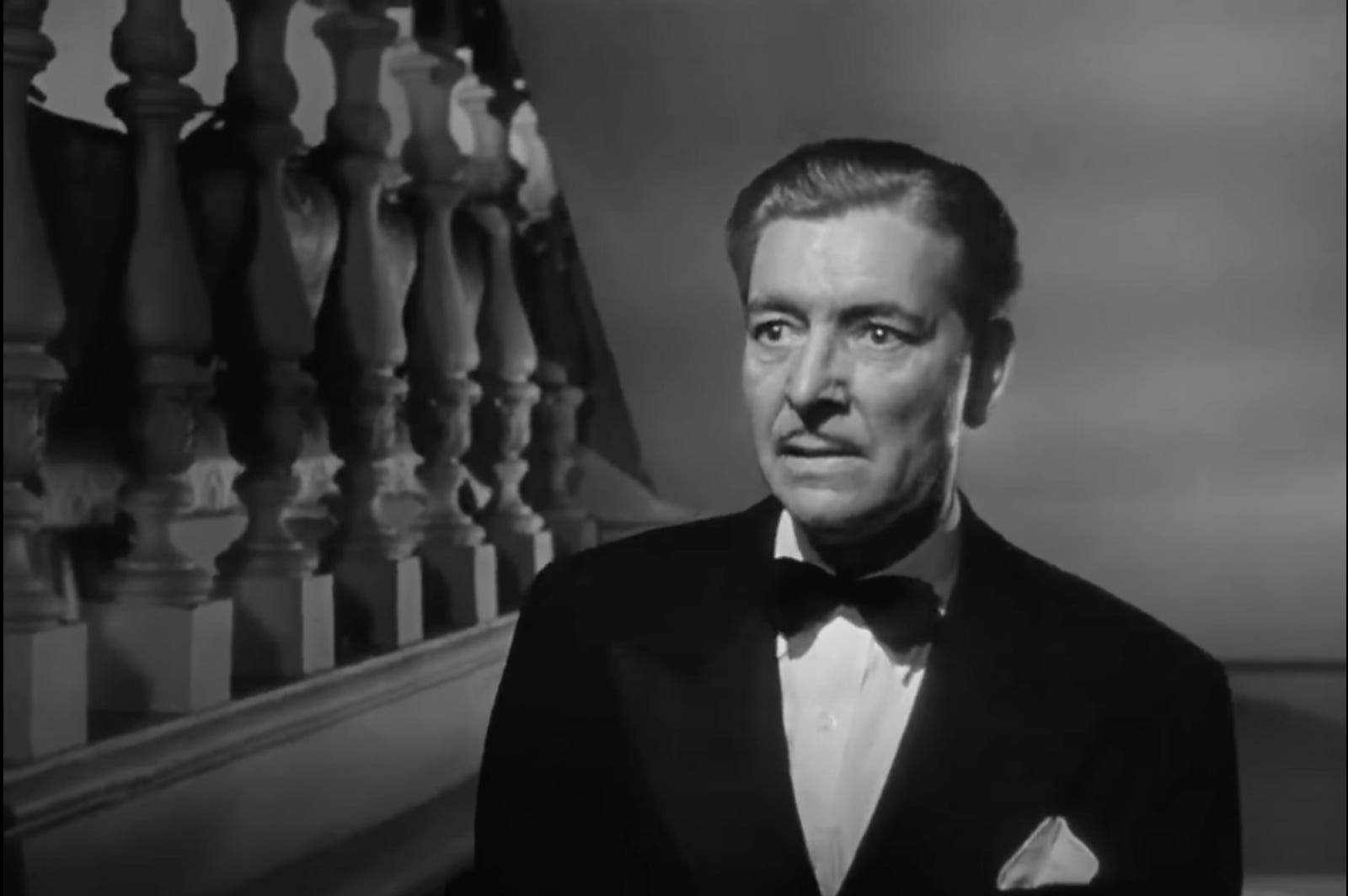
Colman enjoyed a happy marriage now to Benita Hume and often appeared with her on Jack Benny’s radio program as Benny’s movie star neighbors. By the age of 60, he had been Lillian Gish’s leading man in the silent era and a tormenter of Shelley Winters in the noir of A Double Life, and that’s quite a journey, yet Colman excelled again on television in three tour-de-force episodes of Four Star Playhouse for director Richard Florey, one of which he wrote himself, an adaptation of Lord Dunsany’s The Lost Silk Hat (1952). He was at the very peak of his skill in those TV episodes, which are basically one-man shows, but with that he more or less retired after a few more guest appearances. The voice of Ronald Colman suggested that there might be some Shangri-La to retire to with pleasure in some English garden, a place where romance would be an ever-burning low flame.
Here are the three Colman-Robert Florey episodes of Four Star Playhouse:
Great writing, Dan.
Wonderful tribute. He was my mom’s favorite actor 90 years ago.