
Richard Olney
Food Aesthete

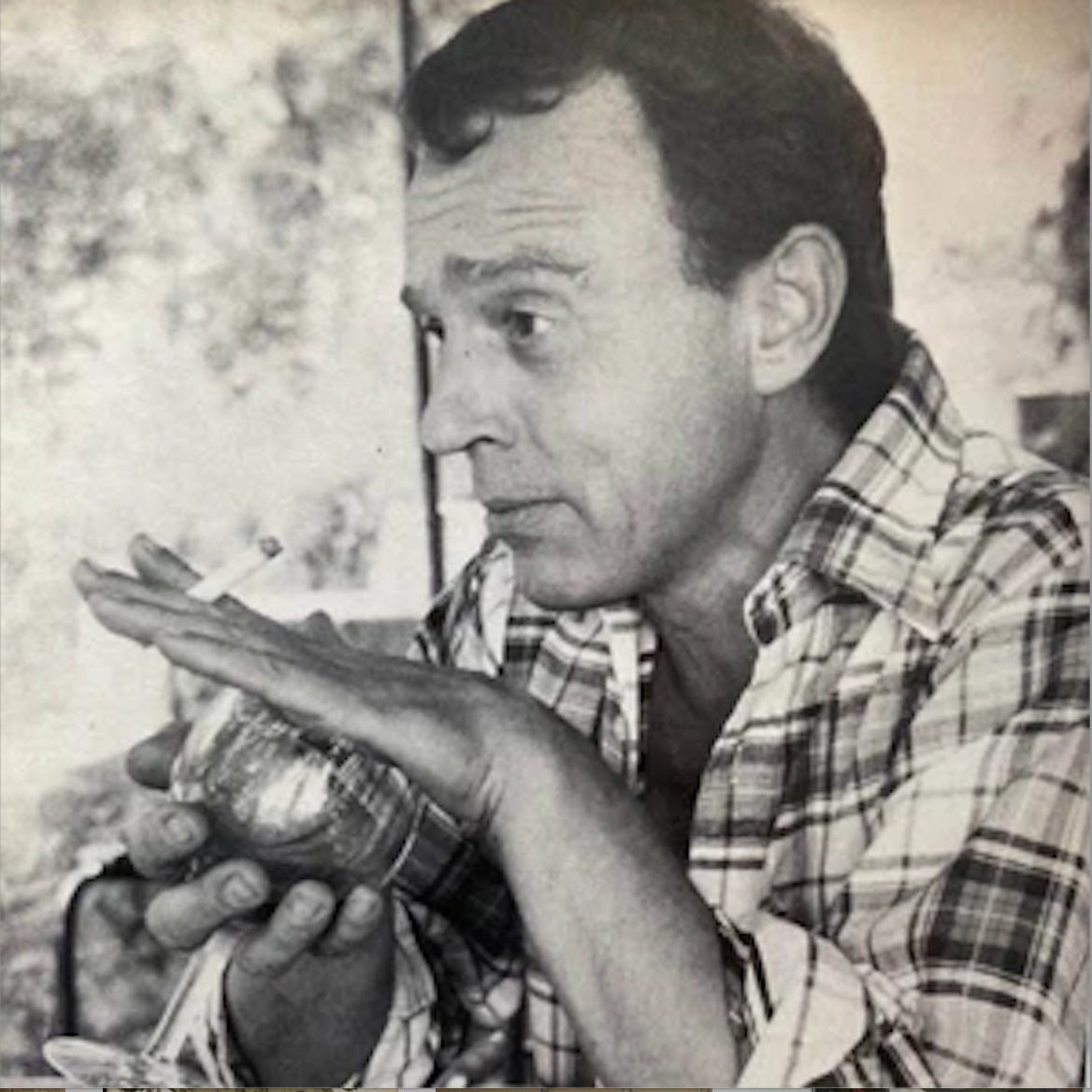
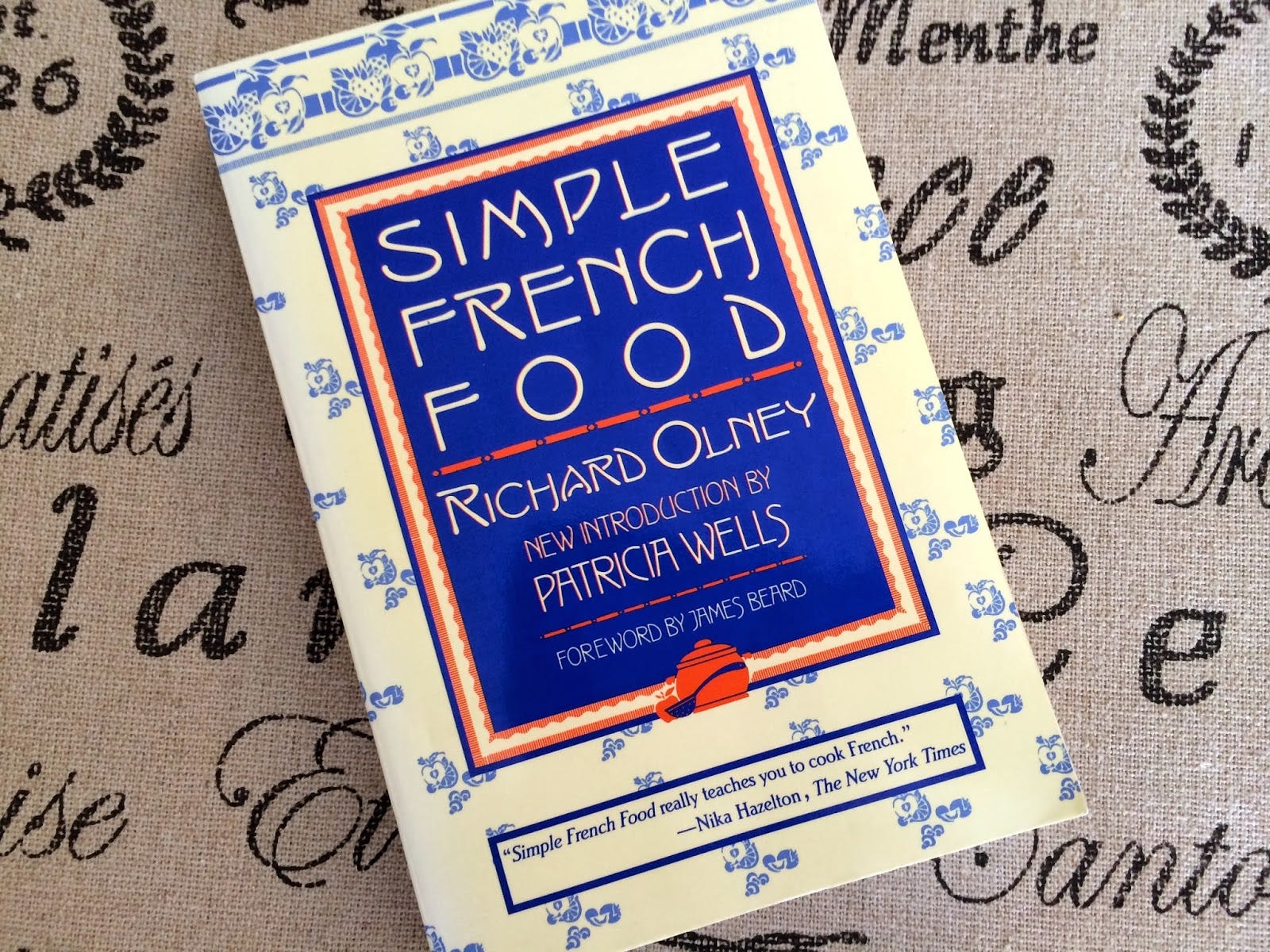
I don’t remember how I happened to have or get Richard Olney’s Simple French Food (1974), a classic cookbook of its kind, but Olney himself captured my imagination as a character after I read Justin Spring’s The Gourmands’ Way (2017), in which Olney was profiled. I started leafing through Simple French Food and was struck by the very elevated tone of its writing, but it wasn’t until the pandemic of 2020-2021, when all social life was curtailed, that my long-time sweetheart Keith Uhlich started cooking from it for us on weekends.
The dish that particularly ravished us, to use an Olney term, was the Braised Chicken Legs with Lemon, which calls for 20-25 garlic cloves; you peel the cloves without crushing them, parboil them for five minutes, and then poach them for 40 minutes in chicken stock. After the lemon sauce is prepared, the garlic cloves then go in the oven with browned chicken legs for 40-45 minutes.
When the dish is brought out of the oven, all this attention to these garlic cloves, which hold their shape, has disarmed and transformed them into something unclassifiable, slightly sweet, a bit smoky, gentle, yielding, and beyond delicious. About the lemon sauce, in which the lemons dissolve into some higher form of themselves, Olney rightly brags, “the sauce must be tasted to be believed.” (By all means serve it over steamed rice as Olney commands so that the lemon sauce can soak into it.)
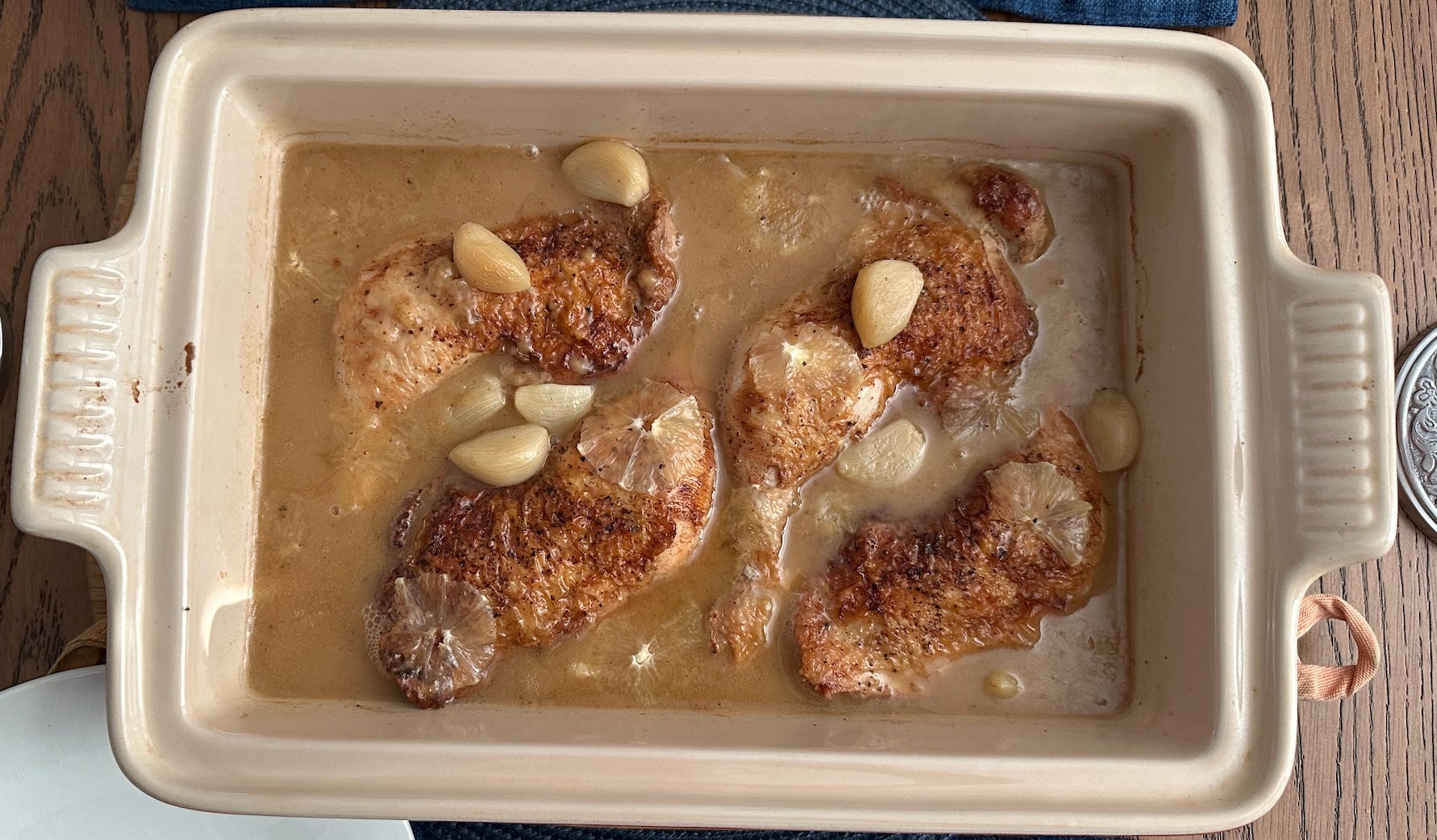
Keith made this Olney dish over and over, and we never tired of it, and when we could have guests over again it was always a hit. But the Braised Chicken Legs with Lemon, which seems to me a masterpiece, doesn’t get Olney much attention online (I saw some complaints that it took too much time, that certain steps weren’t necessary, etc.). His best-known recipe, half a century later, is probably his Chicken Gratin, which we tried once and didn’t particularly care for. Olney himself seems rather uncertain about it in his most famous book: “The acidity of the white wine and the lemon causes the cheese custard to curdle during the cooking, creating a texture that, personally, I find pleasant but which may not please everyone. Try it….” Surely he would be surprised that this recipe, which he was so defensive about, is the one that has lasted, at least for now.
Olney was not fond of Julia Child, who was cutting about him in his New York Times obituary: “I think he enjoyed being difficult,” said Child. “But on the other hand, he could be absolutely charming if you treated him like the genius he considered himself to be.” Olney favored improvisation once cooking rules or structures were learned, and he looked askance at Child’s “it must be done exactly this way because I have tested and perfected this” point of view.
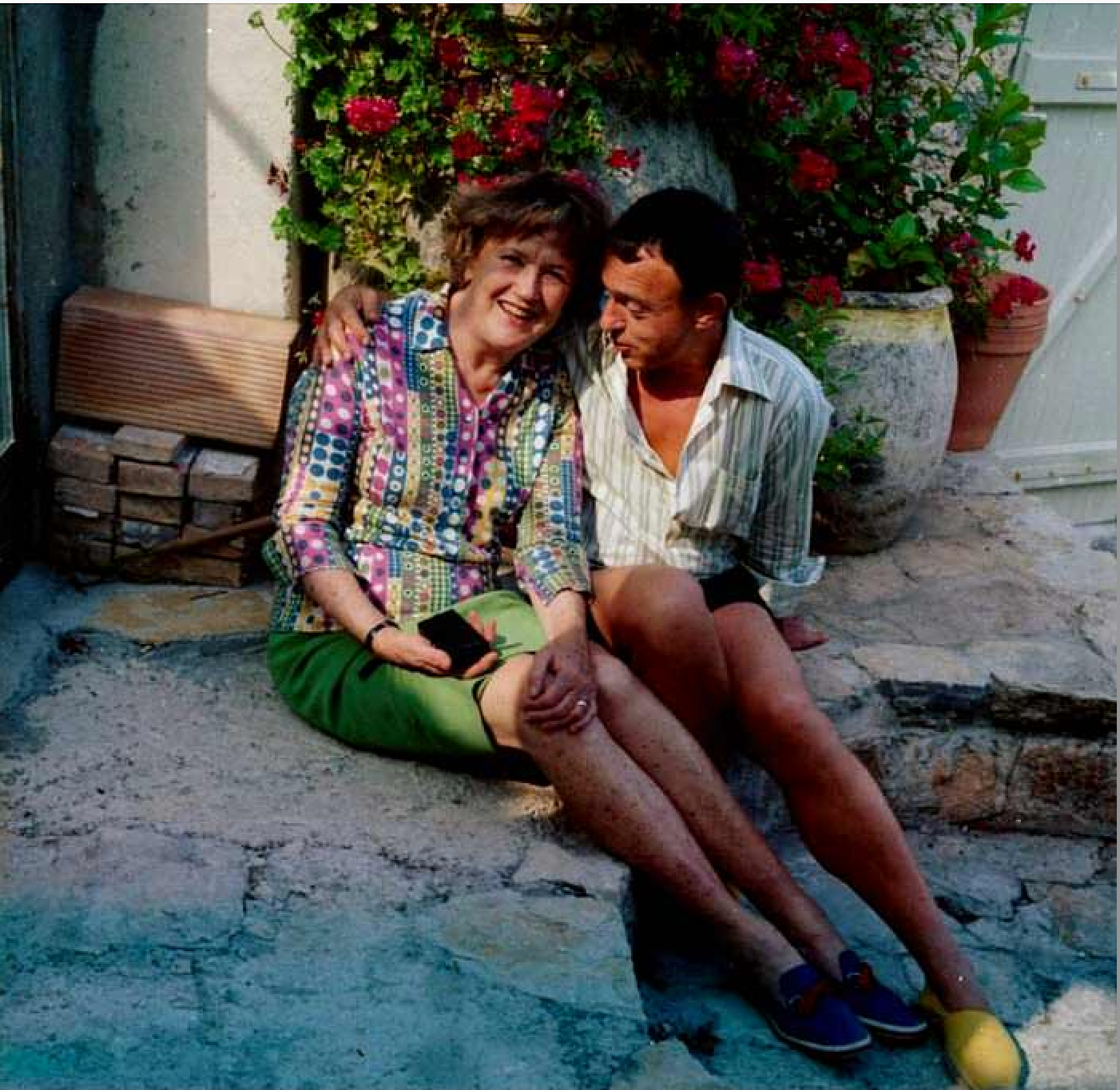
But the more free-form Alice Waters, who ran the influential Chez Panisse restaurant in Berkeley, California, considered Olney her culinary guru in the 1970s. His lover and protégée Jeremiah Tower, who worked at Chez Panisse, spoke admiringly and lasciviously about how Olney was always dressed in an open shirt, espadrilles, and a barely-there bathing suit at his home in France.
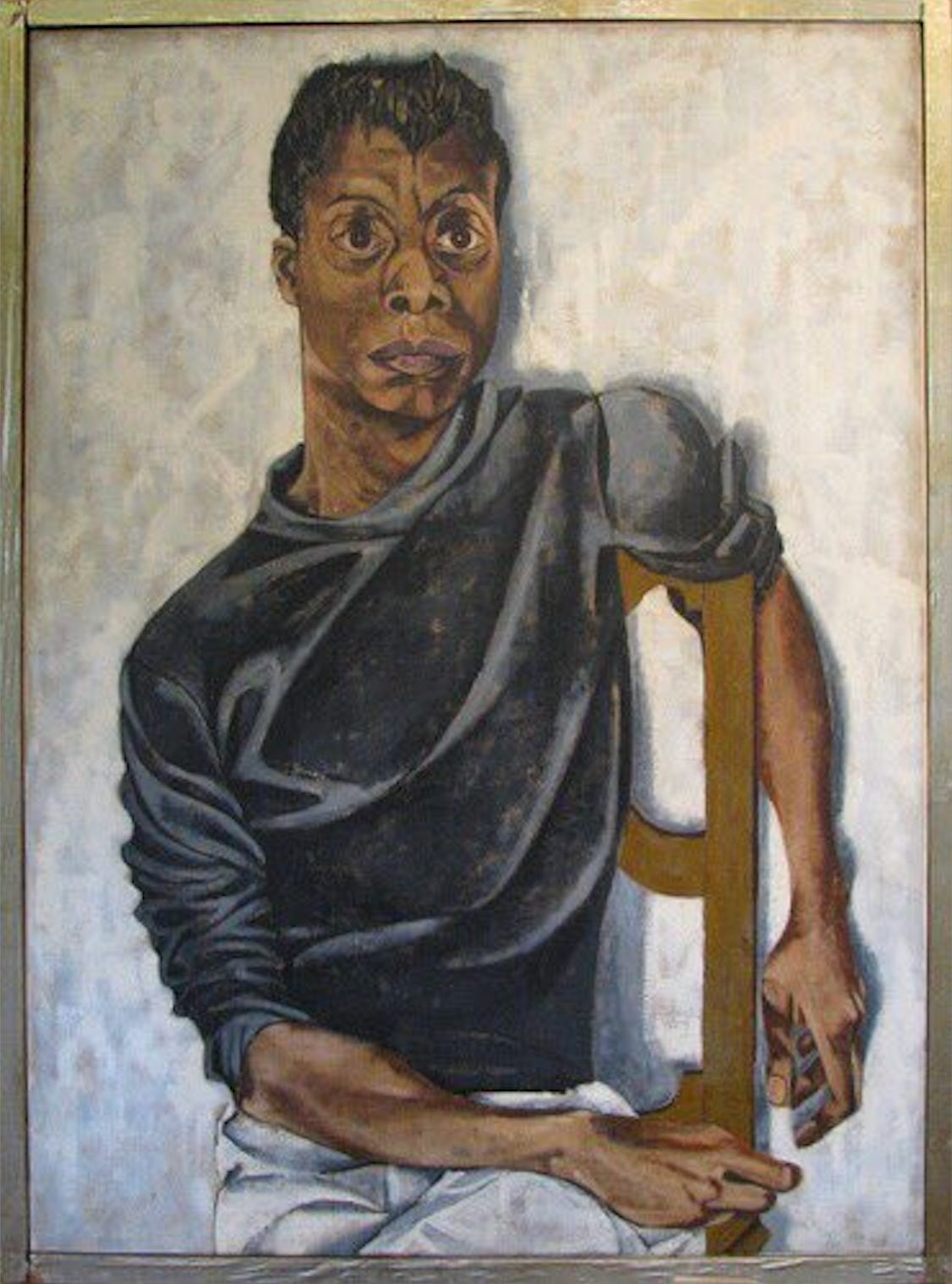
Olney was born in Marathon, Iowa, in 1927, and he spent a bohemian youth as a painter in Paris in the 1950s, where he befriended a creative circle that included James Baldwin (seen below in an Olney painting), Ned Rorem, John Ashbery, and Kenneth Anger. Seeking to create a world of his own, Olney bought a primitive farmhouse in the village of Solliès-Toucas in Provence for around $2000 in 1961, paid for by an Ingram-Merrill grant for his painting.
Olney lived in his house as a relative hermit with no radio, no television, no car, and no telephone for almost 40 years, from age 34 to his death at 72 in 1999; he had a record collection (some 78s of Edith Piaf and one-named French divas such as Mistinguett, Damia, Fréhel) and player, but that’s about it. He slept in an alcove near where he cooked, and for him cooking and drinking wine was his life. Olney was perhaps a bit like the character of Jean des Esseintes in J. K. Huysmans’s Against Nature (1884), a dandy who shuts himself away to contemplate the minutest pleasures and sensations.
Solliès-Toucas is in the extreme southeast of France, near the Mediterranean, and that was reflected in Olney’s cooking; he was not afraid of tomatoes or oregano, and he loved to offer his guests freshly made egg noodles created by his “quasi-miraculous” pasta machine, and for cooking the egg noodles he had this to say: “Cook them in a large quantity of salted, boiling water to which a dribble of olive oil has been added (an old Italian habit, which the French, mistakenly, do not always respect).”
Olney was not big on sweet desserts and preferred to end a meal with cheese and fruit. He enjoyed Pommes Aligot, potato puree with fresh Cantal cheese, but he was also pledged to more outré fare; you may not want to eat sweetbreads (thymus glands), frog legs, lamb testicles (called “frivolities”), tripe, ears, rinds, and tails as he did. But you should try his carrot pudding (odd, but seductive), lettuce custard, mushroom pudding, endless gratins, potato custard (so delicious!), potato tart, zucchini pudding soufflé. A photo of Olney’s heaven-in-every-bite potato custard is below, cooked by Keith on the spur of the moment one late afternoon. Potatoes, eggs, heavy cream, butter, prosciutto, sweet onions…a “breath” of nutmeg…baked in the oven….
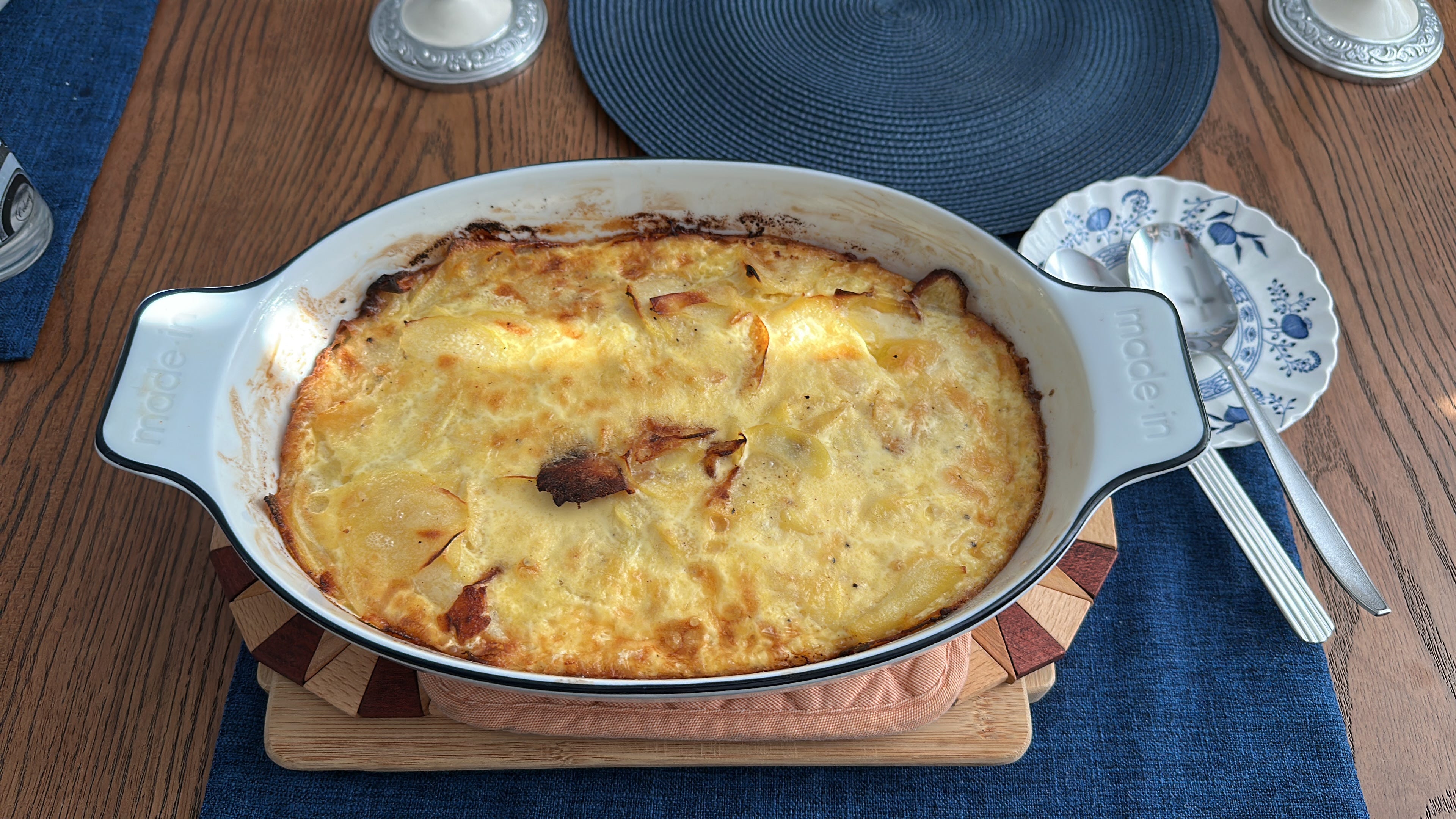
Olney’s writing style is intricate, personal, and often highfalutin, even camp; he doesn’t let a dish simmer but “murmur,” and at another moment he writes a meal should be cooked with only “the suggestion of a simmer.” Olney also advises adding but “a memory of nutmeg” or even the “suspicion” of nutmeg, if you must. (I love nutmeg, the more of it the better, and that may be a matter of personal taste, but my palate is admittedly remedial.) He is such an aesthete when it comes to cooking that he seems to disdain giving recipes at all; at one point he outright states about cooking that “there is no reason ever to do precisely the same thing twice.”
Olney was a romantic who loved the elective affinities of certain foods, how good chicken could taste like the mushrooms it was cooked with while the mushrooms would taste like chicken, the ingredients still themselves but made greater, more succulent, through their carnal alliance. Olney wants us to go for “the caress” of an herb or two; he wants food to “ravish” him and his guests, like a “suave” seducer, and he warns against verbally critiquing a dish for faults after bringing it out when guests are unlikely to notice them. He counsels on certain of his suggestions for dishes to leave out ingredients you find “distressing” or have “no taste” for.
Olney liked “daubes,” or messes of a little of this, a little of that, leftover ingredients whipped up into an artful statement. Always Olney pledges himself to the pleasures of what can be experienced, in his old-fashioned, lofty phrasing, “at table.” Most Olney dishes are complex, with subtle interminglings of flavors. Though he always seeks the new, Olney admits that there are certain recipes that are so delicious that he would gladly eat them every day, or eat nothing but a certain meal (beef and marjoram ravioli, potato and leek soup).
Advising on serving a garlic purée, Olney writes, “The flavor is not aggressive, as many a novice might expect, and the self-appointed enemies of garlic will be unaware of its presence if it is used with discretion.” On mushrooms: “The greater a mushroom’s delicacy, the simpler—and more respectful—should be its preparation.” Regarding fried chicken, Olney favored the very old-fashioned French method of marinading the pieces with lemon juice, olive oil, and fines herbes for a few hours beforehand, with bitter orange squeezed over them when served for chicken legs. He warns against “the ignoble iceberg” lettuce, finds hardboiled eggs in salads as essential as salt, and is against vegetable oil. Olney is ever on the hunt for the exciting, the amusing, the attractive, the delicate, the exquisite, the subtle, the provocative. He demanded the impeccable, he aimed for the sublime.
Olney was basically the enemy of the sort of American food and cooking that has in-your-face flavor like a punch in the stomach. He had this to say on brussels sprouts: “For aggressiveness and determined lack of subtlety, sprouts have no peer. To be good—or so it seems to me—they demand shock treatment, a counteracting flavor to soften harsh relief without altering character—bacon, anchovy, vinegar, hard-boiled eggs.” On Vegetable Soup with Basil and Garlic, he says, “The thing, in itself, is like some unleashed earth force, sowing exhilaration in its wake—but, in that wake, nothing else may be savored, for it has a distinctly paralyzing effect on the palate.”
No doubt he was difficult; his posthumously published memoir Reflexions (1999) consists of almost nothing but score-settling with the many people who have irritated him or done him wrong, or caused some kind of scene he found distasteful, and he complains about various restaurants throughout. But he loved the sharp-witted, glamorous food writer Elizabeth David and his novelist friend Sybille Bedford, who got his first book published, and he pays them tribute.
Olney did a food book series in the late 1970s for Time-Life, and he showed David a letter that Julia Child sent his bosses about precise measurements for the recipes; after reading it David sighed, “Poor old Julia… Now she is Minister of Measures.” Post-1970 or so, most of Olney’s memoir comes from diary entries, which tend toward the negative and complaint, which is why most diaries shouldn’t be kept, let alone published.
Olney was looking for transcendence, and he often found it, as he put it, “at table.” Of a luncheon with his beloved friend Lulu Peyraud, Olney writes, “It was the kind of day that assumes greater importance in retrospect, memory distilling the limpid blue sky, the intermingled scents of the sea air, the bouillabaisse, and the cool fruit of the wine into a sort of abstract symbol of well-being.”
After Olney’s death in 1999, his large family of brothers and sisters wanted his house on the hill to be kept the way he left it, and they appointed a man named Marc Lanza, who lives there with his wife and children, to look after it and keep the spirit of the place alive. Olney’s Simple French Food is a book that can be owned and enjoyed even if you care nothing about food and its preparation, for it is an art object in and of itself.
Beautifully written Dan